Subjects
Study Help
Magnets and electromagnets
Home
Physics
Electricity and magnetism
Magnets and electromagnets
Magnets and electromagnets
The area around a magnet is known as the magnetic field.
Two like poles repel each other and two unlike poles attract each other.
Every magnet has two poles: North and South.
Magnetic fields travel from north to south so be careful to label a diagram in this way with an arrow on the line of field pointing towards south.
A compass can be used to detect a magnetic field.
When electricity passes along a wire, it forms a magnetic field.
Using direct current will make the field in circles around the wire. This can be tested by using a compass.
You need to learn the magnetic rules which includes the right hand grip rule.
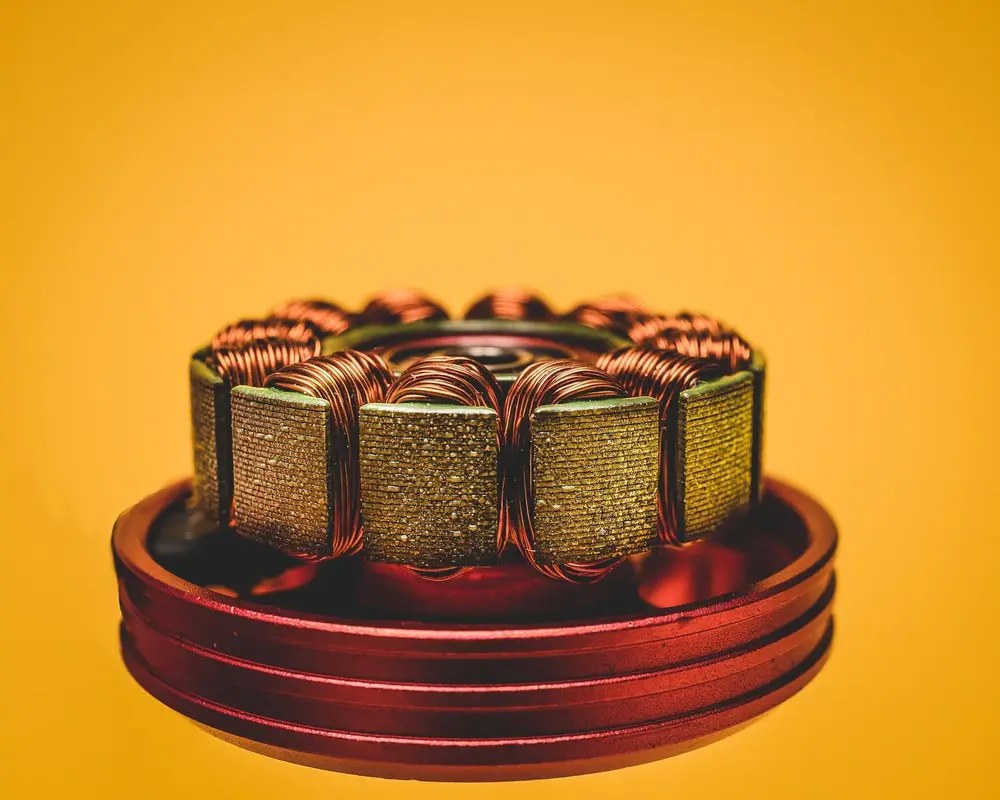
If a coil of wire is used a stronger magnetic field is produced.
You also need to know about some devices that work by electromagnetism such as an electric bell and relay.
If you are asked to draw the magnetic field around a magnet REMEMBER:
The lines must travel around the magnet.
They must not touch each other.
Label the magnetic field with arrows going from north to south.
Electricity and magnetism
Conductors of Electricity
Conductors of Electricity
Electricity and magnetism
Current, voltage and resistance
Current, voltage and resistance
Electricity and magnetism
Electric charge
Electric charge
Electricity and magnetism
Electromagnetic Induction
Electromagnetic Induction
Electricity and magnetism
Parallel circuits
Parallel circuits
Electricity and magnetism
Series circuits
Series circuits